Commercial Rodent Control: Mice and Rats in Business Buildings
Rodent control in a commercial building means finding how mice or rats get in, closing those routes, removing the animals already inside and watching for new activity. Trapping alone rarely holds, because other animals simply take the place of the ones removed if the openings stay.
Describe the job and add your city. Free to request, no obligation.
Mice can squeeze through very small gaps, such as a worn door sweep, a cable penetration or the corner of a dock leveller. Rats are larger but dig under slabs and travel along pipes and walls. In commercial buildings, they are drawn to food waste, pallets stored against walls, and door gaps at loading docks that sit open during shipping.
A strong job is a mix of exclusion, sanitation changes, trapping or baiting where it is allowed and safe, and follow-up monitoring. Bait is used carefully in food areas, often inside tamper-resistant stations, and many facilities prefer traps indoors.
What the work includes
- Inspection of the building envelope, roof, docks and utility penetrations
- Identification of entry points and travel routes
- Sealing with door sweeps, mesh, steel wool, sealant or metal flashing
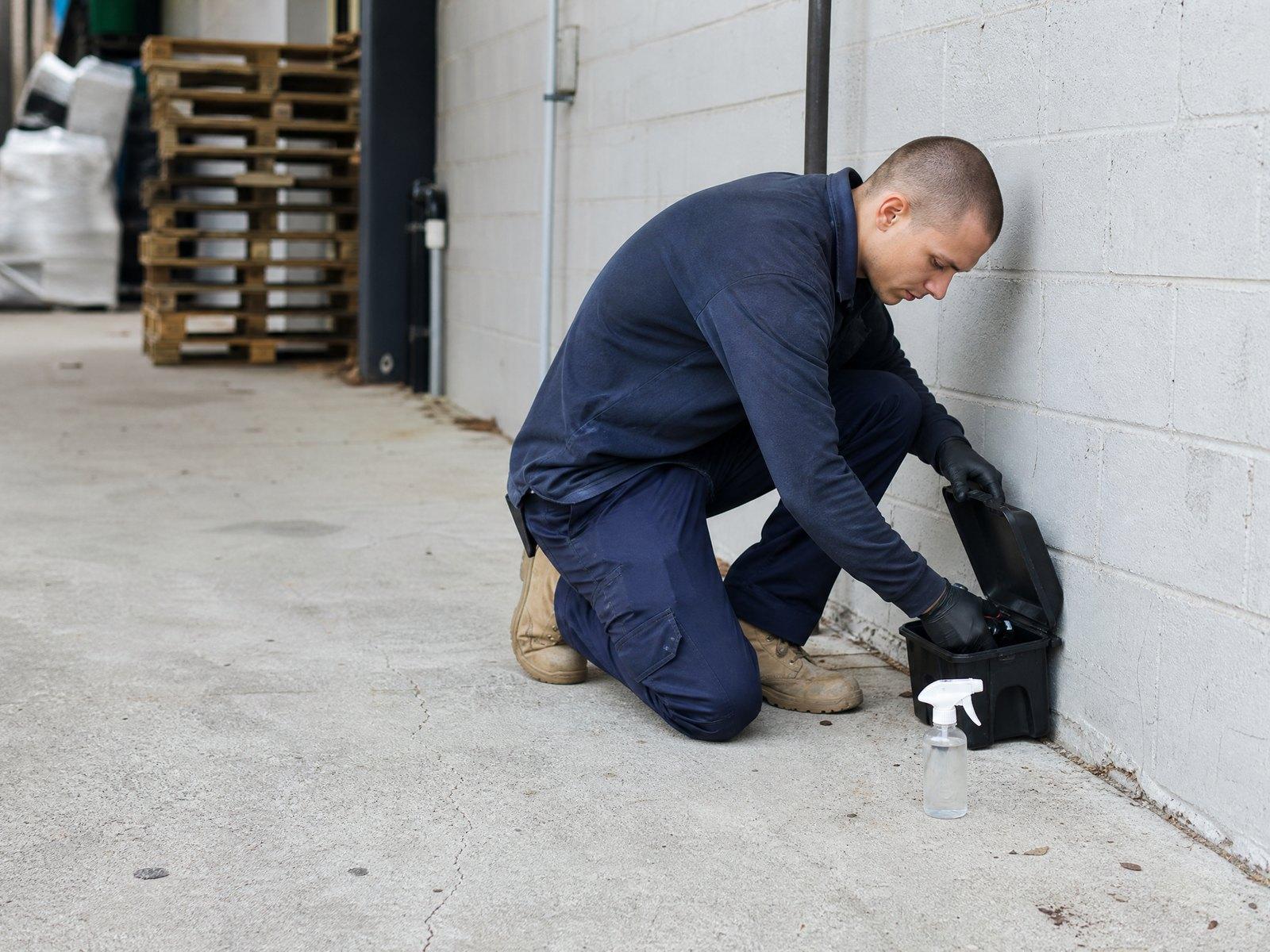
- Exterior bait stations in tamper-resistant boxes where appropriate
- Interior snap traps or monitoring stations in sensitive areas
- Removal of dead rodents and cleanup of droppings where scoped
- Advice on pallet storage, waste handling and housekeeping
- Follow-up visits and a record of activity by location
Signs of rodents in a commercial building
Droppings along walls, behind equipment or on shelving
Gnawed packaging, wiring or insulation
Grease marks along baseboards and around pipes
Scratching or squeaking sounds in ceilings or walls at night
Shredded nesting material in quiet corners or ceiling voids
Rodent sightings by staff, especially around closing time
How the work goes, step by step
Report the activity
Tell the specialist where droppings or sightings occurred, what the building stores and the date the problem began.
Inspection
A technician checks inside and out, looking for gaps, gnaw marks and runways, and photographs the entry points.
Written plan
The quote lists sealing work, devices, visit frequency and what is included in follow-up.
Seal and treat
Entry points are closed, traps and stations are placed, and the animals inside are removed.
Monitor
Devices are checked on the agreed schedule until catches stop, and the findings are recorded.
What changes the price
- Number of entry points
- A building with many doors, docks and penetrations needs more sealing material and time.
- Height and access
- Roof edges, rooflines and high dock doors need ladders or lifts.
- Size of infestation
- A few mice is a light job. A large, established population needs several visits and more devices.
- Exterior grounds
- Large yards, drainage ditches and neighbouring vacant lots increase pressure and the number of stations.
- Follow-up visits
- Monitoring until activity stops is priced by visit, so the longer it takes, the more it costs.
What a good quote spells out
- Which entry points are sealed and with which materials
- Where bait is used, where traps are used, and why
- How many follow-up visits are included in the price
- Who removes dead rodents and cleans droppings
- What the report shows for each location, such as device number and activity
Rodent Control: questions people ask
Why do mice keep coming back after treatment?
Usually because the entry points were not closed, or because food and shelter inside the building are still available. Exclusion and sanitation changes hold better than devices alone.
Is bait safe in a food business?
Bait is typically placed in locked stations outside, and traps are preferred inside food areas. Your provider should explain the choice and follow your audit rules.
How long does it take to clear a rodent problem?
A light mouse problem may settle within a few weeks of sealing and trapping. Established populations or large buildings take longer, and follow-up visits confirm the result.
Can rodents damage the building?
Yes. They gnaw wires, insulation and packaging, and can cause fire and contamination risks. That is one reason to treat activity promptly.
Other Vexon services

Ready for a Real Pest Program?
Tell us about the building and what you are seeing. We review every request, and a specialist who serves your area follows up with next steps.
Request a free quote →