Bed Bug Heat Treatment for Hotels, Rentals and Care Homes
Bed bug heat treatment raises the temperature of a room or unit to a level that kills bed bugs at every life stage, and holds it long enough to reach hidden spots. It is chosen in hotels, rentals and care homes because it is fast, usually needs no long stay away from the room, and does not depend on bugs crawling through a residue.
Describe the job and add your city. Free to request, no obligation.
The heat has to reach everywhere the bugs hide: mattress seams, bed frames, baseboards, behind outlet covers, inside furniture. Technicians place sensors to confirm the temperature in the coolest spots, and fans move the air. Heat-sensitive items such as candles, aerosol cans and some electronics are removed first.
Bed bugs travel between units through walls, pipes and shared laundry, so a good job includes inspecting the neighbouring rooms. A follow-up inspection a couple of weeks later confirms whether any survived or new bugs arrived.
What the work includes
- Inspection of the reported room and adjacent units to confirm activity
- Written prep instructions for staff or tenants
- Heat equipment set up with fans to circulate air
- Temperature sensors placed in cool spots and logged
- Heat held for the required time to reach hidden spots
- Targeted treatment of cracks and voids where heat may not reach
- Follow-up inspection after the treatment
- A written report with temperatures reached and findings
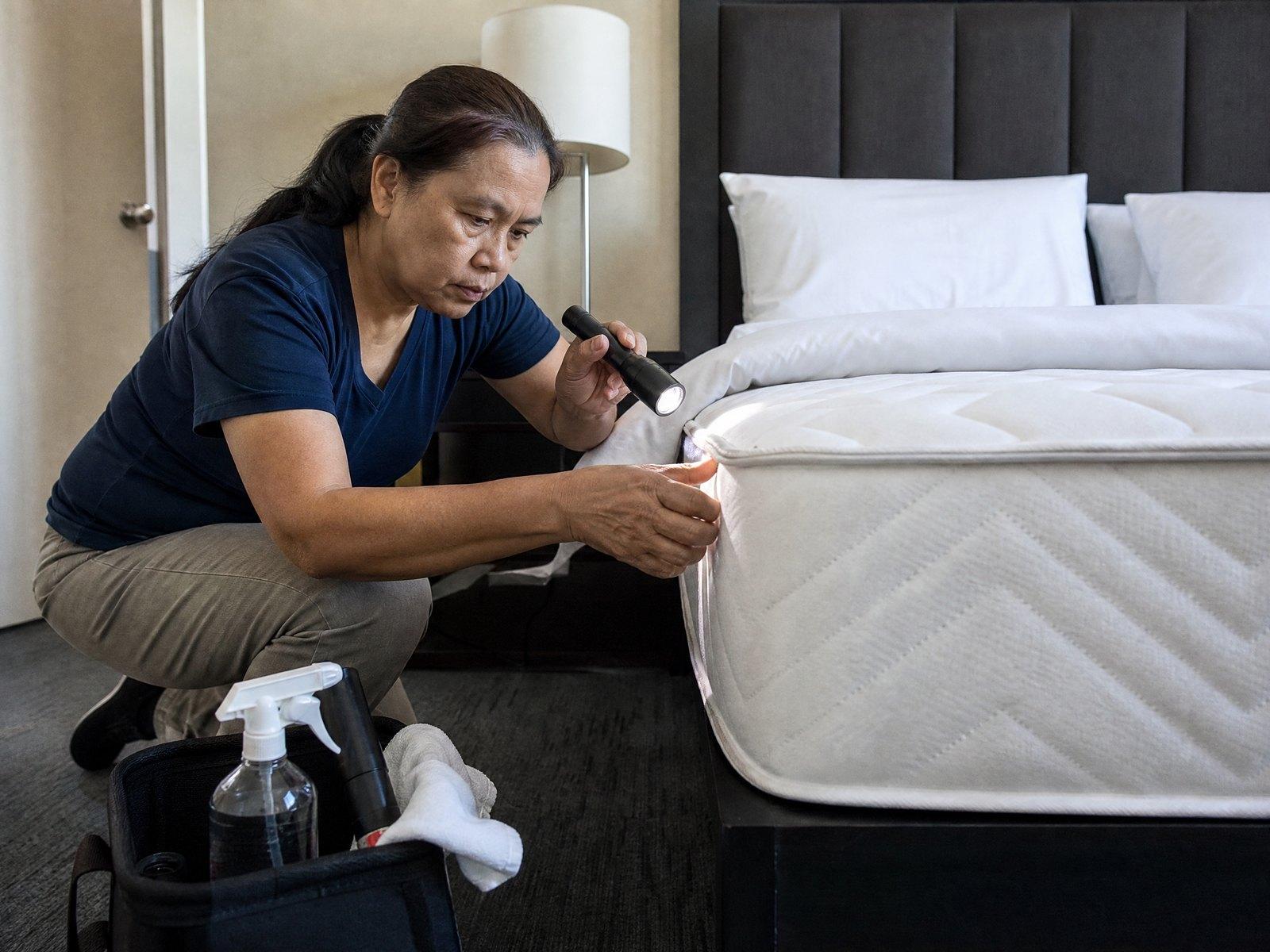
Signs of bed bugs in a room or unit
Small itchy bites in lines or clusters after a night's sleep
Tiny dark spots or smears on sheets, mattress seams and headboards
Pale shed skins or small rusty stains on bedding
A sweet, musty odour in heavily infested rooms
Live bugs along seams, behind headboards or in furniture joints
Complaints from several guests or tenants in nearby rooms
How the work goes, step by step
Report the problem
Share the unit numbers, signs found, guest or tenant complaints and any prior treatment.
Inspection
A specialist confirms bed bugs, checks neighbouring units and decides whether heat is the right method.
Prep and quote
You receive written prep instructions and a quote covering rooms, adjacent checks and follow-up.
Heat treatment
The room is heated, sensors confirm the target temperature and the temperature is held for the agreed time.
Follow-up
A second inspection checks for survivors or new activity, with a report afterwards.
What changes the price
- Number of rooms or units
- Each room needs its own equipment and sensors, so the cost rises with the count.
- Size and clutter
- Large spaces and heavy clutter take longer to heat and are harder to inspect.
- Adjacent units
- Inspecting or treating neighbouring rooms adds time but lowers the risk of re-infestation.
- Furniture and contents
- Upholstered furniture and items that cannot take heat may need other treatment.
- Timing
- Treating overnight or between guests takes planning and can add to the cost.
What a good quote spells out
- What temperature and hold time the treatment aims for, and how it is logged
- Which adjacent units are inspected and when
- What the prep list asks of staff or residents, and who is responsible
- What happens if bugs are found at the follow-up
- Whether a residual treatment is used alongside the heat, and which products
Bed Bug Treatment: questions people ask
Does heat treatment kill bed bug eggs?
Yes, when the target temperature is reached and held long enough in each hiding spot. That is why sensors in cool areas are used to confirm the result.
Can guests return to the room the same day?
Often once the room has cooled and been aired, though this depends on the treatment plan. Ask what time window to expect.
Is heat better than chemical treatment?
Heat reaches hidden spots quickly and avoids residues in the room, but it does not leave a protective barrier. Many jobs combine it with a targeted treatment.
How do bed bugs get into hotels and rentals?
Usually on luggage, clothing or used furniture, and they spread between rooms through walls, pipes and shared laundry or staff carts.
Other Vexon services
Ready for a Real Pest Program?
Tell us about the building and what you are seeing. We review every request, and a specialist who serves your area follows up with next steps.
Request a free quote →